Breaking Barriers, Building Futures: The Inclusive Education Mission
By Jenipher Lembe, – March 17, 2026.
Imagine walking into a library. Towering shelves surround you, overflowing with books. Knowledge is everywhere – yet you are told you can touch the covers, feel the pages, even smell the ink… but you are not allowed to open the books freely. Or perhaps you can, but only under strict, limiting conditions.
This is the silent reality for millions of learners with disabilities around the world. They are present in the classroom, yet the doors to knowledge remain closed – not by chains, but by systems that were never designed with them in mind.
Whenever we design solutions or think about inclusive education, we always ask ourselves two questions:
- Are we creating solutions that meet the needs of every learner?
- What if the greatest barrier to learning is not the learner’s ability, but the environment’s inability to adapt?
For decades, education systems have asked students to adjust – to fit into rigid structures, static textbooks, and digital platforms built for a mythical “average” learner. The result is not just inequality. It is exclusion.
Brilliant minds have been left behind not because they could not learn, but because the system could not see them.
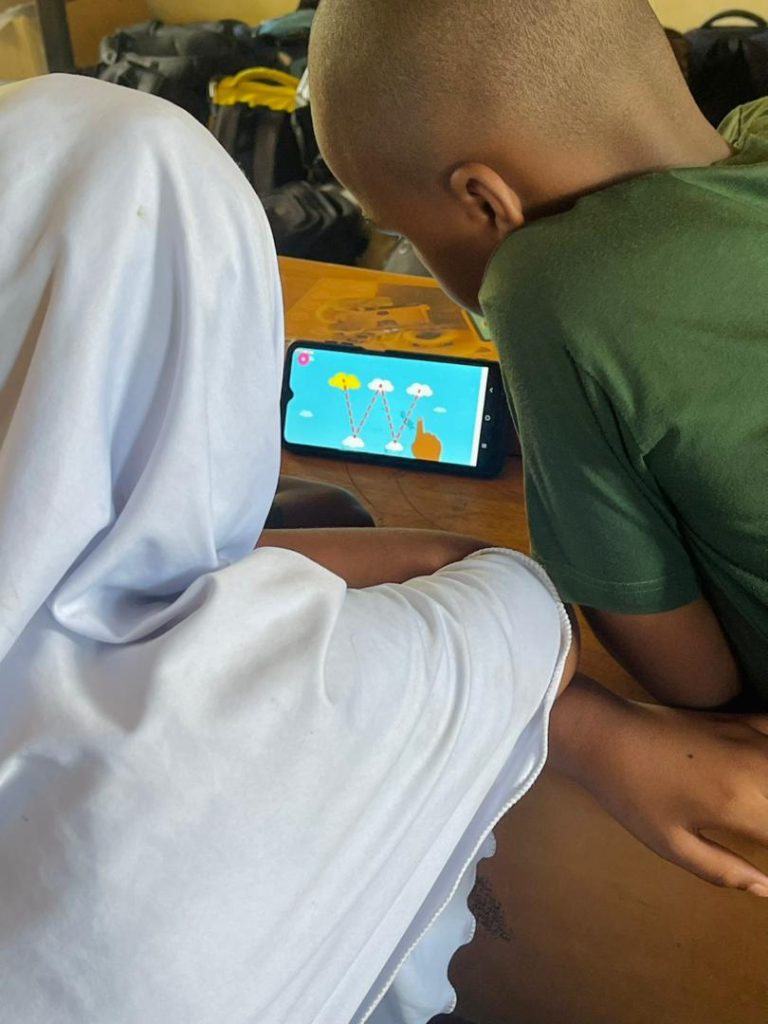
Students at Mbuyuni Primary School with dyslexia engaging with the Shule Direct platform, using gamified learning content to practice and recognize numbers and letters.
Listening Before Building: Learning Directly from Students
Inclusion cannot be designed from behind a desk.
To truly understand the challenges learners face, we have been constantly engaging with learners of different abilities, including autistic students, children with hearing impairments, visually impaired learners, and learners navigating conditions such as dyslexia. These engagements allow us to listen, observe, and learn directly from the students we aim to support.
At Mtambani Primary School, our team — led by Equity and Inclusion Mission Lead Careen Alex engaged with 15 children with autism and 14 children with hearing impairments, observing how they interact with learning materials and identifying the barriers they face in accessing information.
The experience revealed powerful insights: autistic learners often thrive with structured, predictable, and visually supported content, while learners with hearing impairments rely heavily on demonstrations, images, and visual cues to understand new concepts.
At Mbuyuni Primary School, our team engaged with 22 children with dyslexia, observing how they navigate reading and writing challenges and interact with learning materials in ways that suit their learning styles.
Through these engagements, we continue to discover that when learning materials in d Tech platforms like Shule Direct are presented visually, structured clearly, and adapted to learners’ needs, students are capable of learning independently and confidently.
These insights are directly shaping how Shule Direct designs its solutions, ensuring that every learner can access education with the dignity, support, and accessibility they deserve.
The Heart Behind this Mission
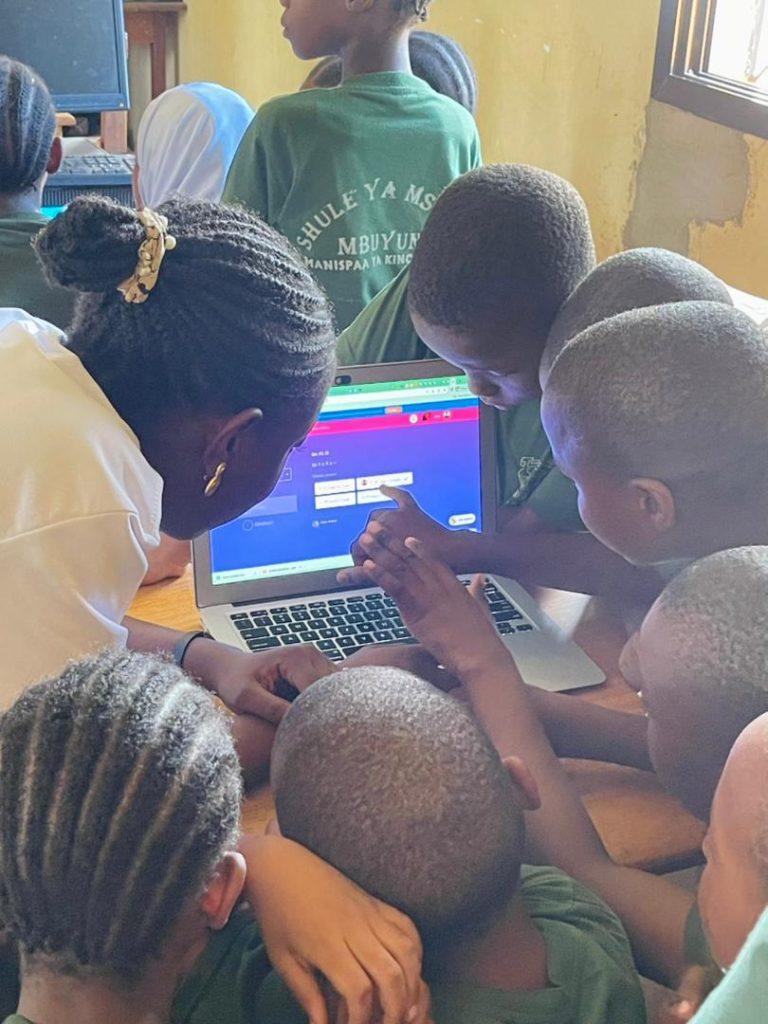
At the center of the Equity and Inclusion mission is Careen Alex, the Inclusive Education Mission Lead. Careen goes beyond overseeing projects – she spends time in the field, interacting directly with learners, teachers, and communities to understand their experiences.
Through these interactions, she ensures that every innovation and every solution that we develop is grounded in reality and addresses the real needs of our users.
For Careen and the Shule Direct team, inclusion is not a box to tick; it is a commitment to making every learner visible in the design of education solutions. Our dedication drives the continuous improvement of Shule Direct’s platforms and accessibility tools.
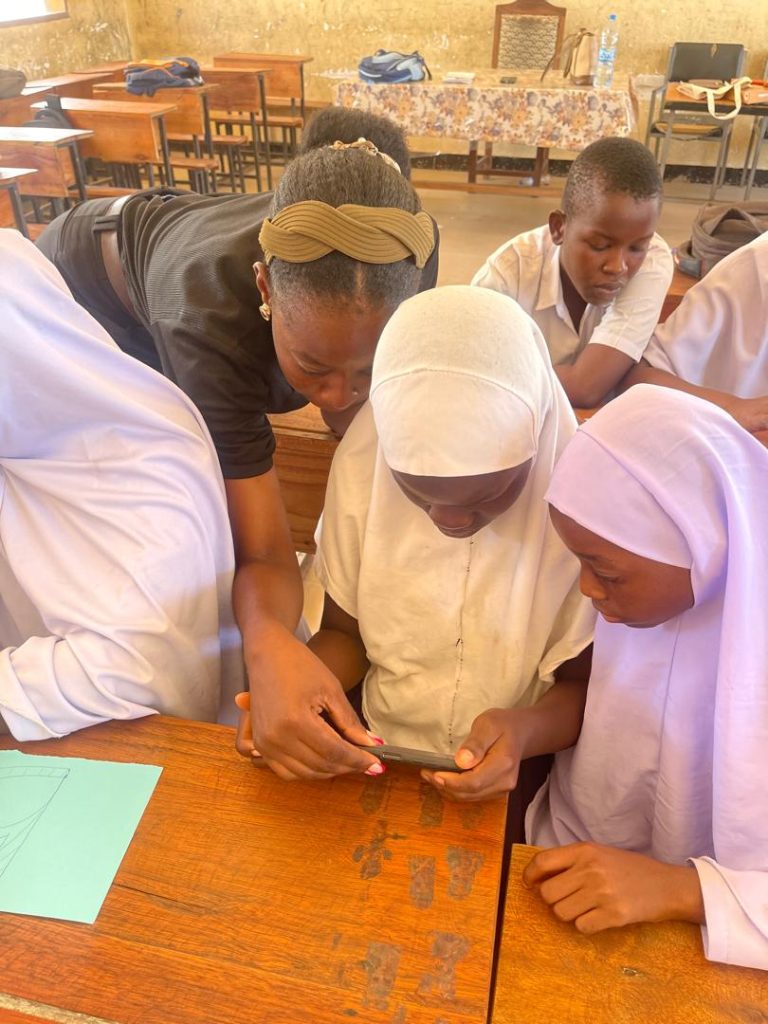
Our Equity and Inclusion Mission Lead engaging directly with students with hearing impairments at Mtambani Primary School – listening, observing, and asking thoughtful questions to understand how each child learns best.
Understanding the Different Faces of Learning
Learners with special educational needs represent a spectrum of strengths, perspectives, and learning styles:
Visually impaired students navigate primarily through sound and touch.
Deaf learners interpret information visually.
Students with dyslexia may struggle with reading and writing, but excel in creative or analytical thinking.
These learners are not limited by intelligence – they simply need learning environments that adapt to their ways of processing information. A good example is how dyslexic learners benefit from text-to-speech tools, dyslexia-friendly fonts, and multi-sensory learning approaches while visually impaired learners rely on screen readers, magnification tools, and audio descriptions.
Understanding these needs is the first step toward building truly inclusive digital learning platforms.
Making Digital Learning Truly Accessible
Access to devices alone does not guarantee learning. Many students face barriers when content is hard to read, text is confusing, or materials are not adapted to the way they learn. For learners with visual impairments, dyslexia, or hearing impairments, these barriers can prevent them from fully participating in digital education.
Recognizing this, we have improved our platforms to ensure that every learner can engage with content independently and confidently. These enhancements are designed to make learning easier and truly inclusive:
Text-to-Speech Functionality: Learners can have written content read aloud to them. This means students with visual impairments or reading difficulties can follow lessons and instructions just as easily as their peers.
Adjustable Font Sizes & Magnification Tools: Text, diagrams, and charts can be enlarged so that every student can clearly see and understand what they are learning.
Dark and Light Mode Options: Students can adjust the screen to reduce eye strain and make reading more comfortable, helping them focus for longer periods.
These improvements are part of a broader Accessibility Toolkit, designed to support over 150,000 learners who face challenges accessing inclusive digital learning. By embedding accessibility into our platforms, Shule Direct is turning technology into a bridge, not a barrier.
Experience Inclusive Learning
At Shule Direct, we believe that learning should be flexible, adaptive, and accessible to every student, whether visually impaired, deaf, or navigating dyslexia. Technology becomes a powerful equalizer, allowing all learners to access knowledge with dignity and confidence.
We invite you to explore our web platform through www.shuledirect.co.tz and see how every learner can interact with content in ways that suit them best.
Because when education is truly inclusive, no learner is left standing outside the library – everyone gets to open the book.